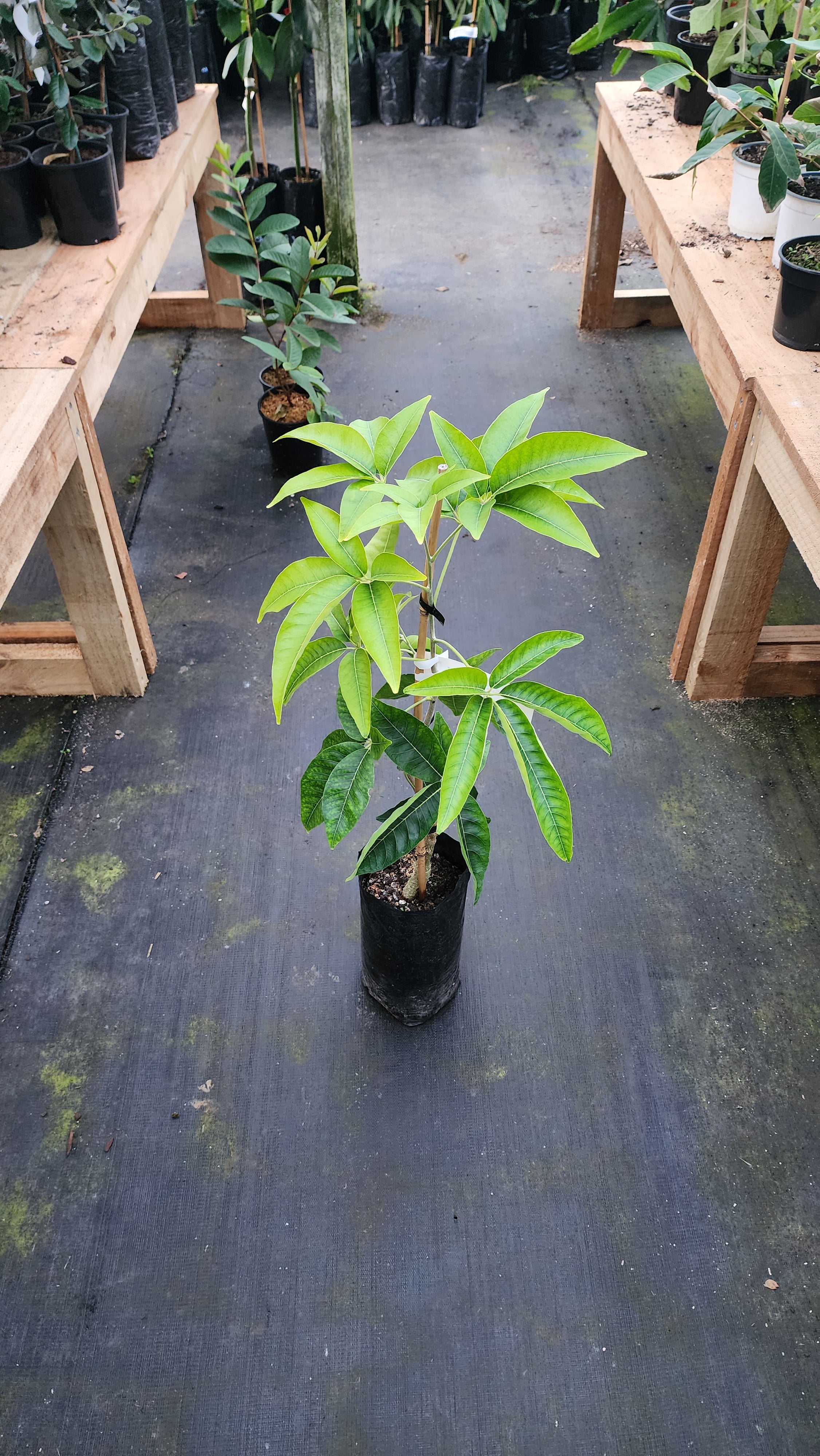
Wiki Woo Casimiroa (White Sapote, Grafted)
- Regular price
-
$80.00 - Regular price
-
- Sale price
-
$80.00
Couldn't load pickup availability
Wiki Woo is one of our favourite casimiroa (white sapote), and is often regarded as one of the best varieties available in New Zealand. It produces big, very sweet fruit with smooth, creamy yellow flesh and a rich, full flavour. Like other yellow-fleshed casimiroa, it has a stronger, richer taste than the white-fleshed types.
The fruit are fairly even in size, with a thin green skin that may show a slight colour change as it ripens. When ripe, the flesh is soft and custard-like: slice the fruit in half and scoop it out with a spoon.
- Fruit size: Large
- Flavour: Very sweet and rich
- Flesh: Creamy yellow, smooth custard texture
- Skin: Thin and green
Enjoying your fruit
Casimiroa are naturally high in sugars (around 27%) and rich in vitamins A and C. Enjoy Wiki Woo fresh and chilled with a squeeze of lemon or lime, or pair it with tangy fruit such as passionfruit or tamarillo to balance the sweetness. It also makes outstanding smoothies, milkshakes and ice cream. The seeds are not edible.
The fruit bruise easily, so pick them while still firm and handle gently. Ripen at room temperature and check daily; once soft, move them to the fridge, where they will keep for up to a week. Surplus flesh freezes well.
Growing
Casimiroa are surprisingly easy to grow for such a tropical-tasting fruit. They are evergreen, prefer a sunny spot, grow in most soils as long as drainage is good, and handle light frosts once established (protect young trees from frost). The tree can be kept to a manageable size by pruning after harvest.
These are grafted trees. Any flowers that form in the first season are best removed so the tree can put its energy into growth.
Casimiora care tips
- Subtropical to tropical, tolerating brief temperatures down to -5.5°C. However, young trees require frost protection.
- Prefers moderate humidity, but adapts well to high humidity.
- Requires sunny locations in cooler areas, with potential for some shade in warmer climates.
- Needs regular watering, though it can withstand short dry periods.
- Deep soil is essential due to its large taproot; container growing is limited to trees with root pruning or cuttings.