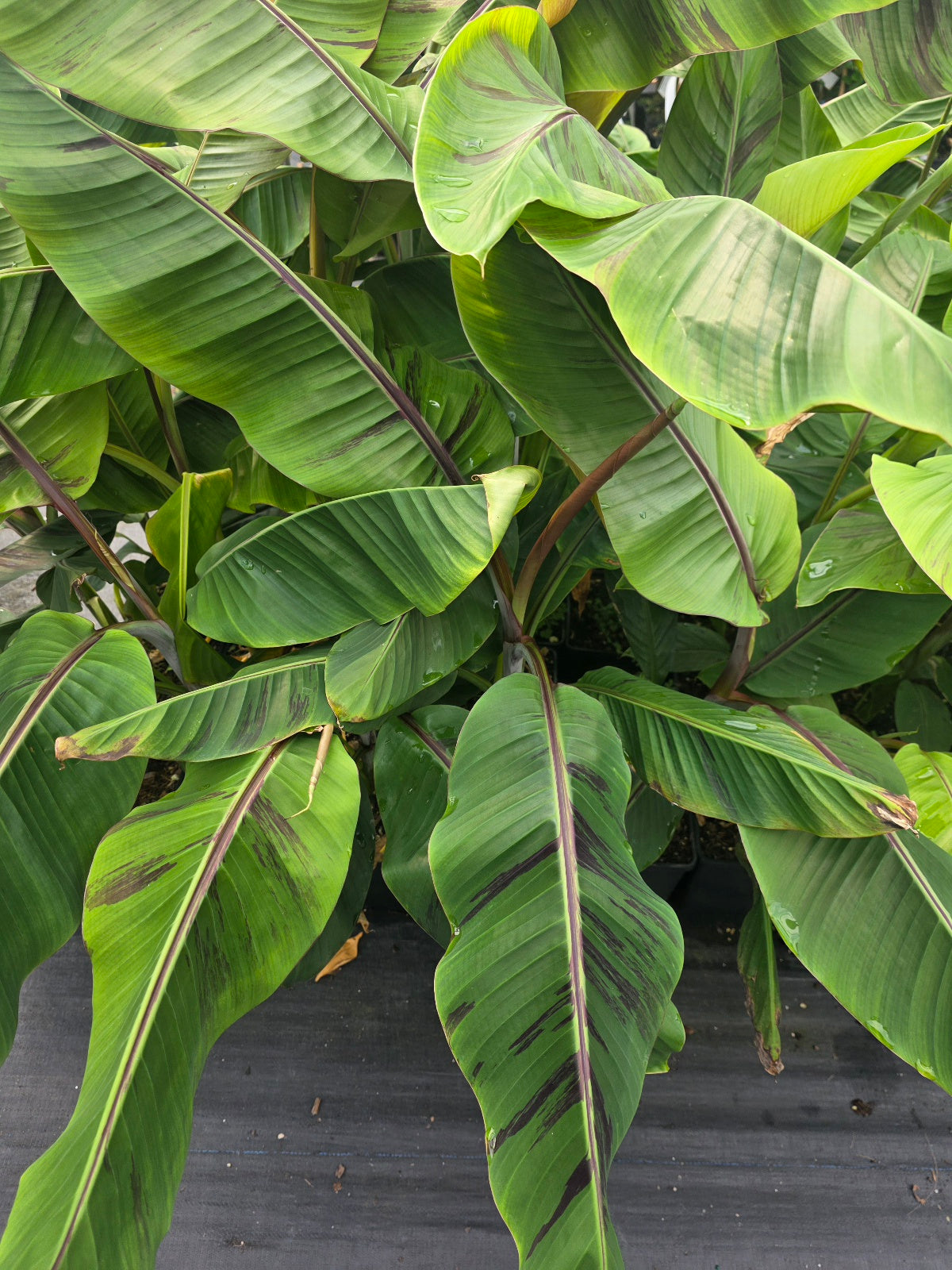
Banana - Musa sikkimensis (Red Tiger)
- Regular price
-
$60.00 - Regular price
-
- Sale price
-
$60.00
Couldn't load pickup availability
Musa sikkimensis (Darjeeling Banana) is the ultimate "bulletproof" exotic and the second hardiest banana after Musa basjoo. While it is more tolerant of cold than many bananas, stems can be damaged by hard freezes (around -2°C to -3°C), requiring winter mulching or overwintering indoors, it remains incredibly resilient with roots that can withstand temperatures as low as -10°C. A thick layer of winter mulch over the base is all it needs to sail through the coldest months, ensuring it vigorously reshoots every spring.
Prized for its architectural flair, it features massive, wind-resistant leaves with striking red midribs and maroon-tinted undersides. Reaching up to 4 meters, it creates an instant jungle canopy in any backyard. Simply plant in a sunny, sheltered spot with plenty of compost and water to watch it thrive.
To ensure a safe journey, we may trim larger leaves for secure packing. Banana plants naturally undergo abscission, quickly replacing older foliage with fresh growth.
Banana Plant Care Tips
-
Sunlight: Banana plants thrive in full sun, so it's best to plant them in an area that receives at least 6-8 hours of direct sunlight per day.
-
Soil: Banana plants prefer well-drained soil that is rich in organic matter. A pH range of 5.5-7.0 is ideal for optimal growth.
-
Watering: Banana plants require regular watering, especially during the growing season. Keep the soil moist, but not waterlogged. Overwatering can cause the roots to rot.
-
Fertilizer: Banana plants are heavy feeders and require regular fertilization. Apply a balanced fertilizer every 4-6 weeks during the growing season.
-
Mulching: Mulch around the base of the plant to help retain moisture and suppress weeds.
-
Pruning: Remove any dead or damaged leaves and suckers (smaller offshoots that grow from the base of the plant) regularly. This will help promote healthy growth and prevent disease.
-
Pests and diseases: Banana plants are susceptible to a variety of pests and diseases, so it's important to monitor the plant regularly for any signs of infestation or disease. Common pests include aphids, spider mites, and mealybugs, while common diseases include Panama disease and Sigatoka leaf spot.
-
Harvesting: Bananas are typically harvested when they are fully ripe and the skin is yellow. Cut the bunch off the plant with a sharp knife and allow the fruit to ripen further at room temperature.