


Double Grafted Finger Lime (Black & Yellow)
- Regular price
-
$138.00 - Regular price
-
- Sale price
-
$138.00
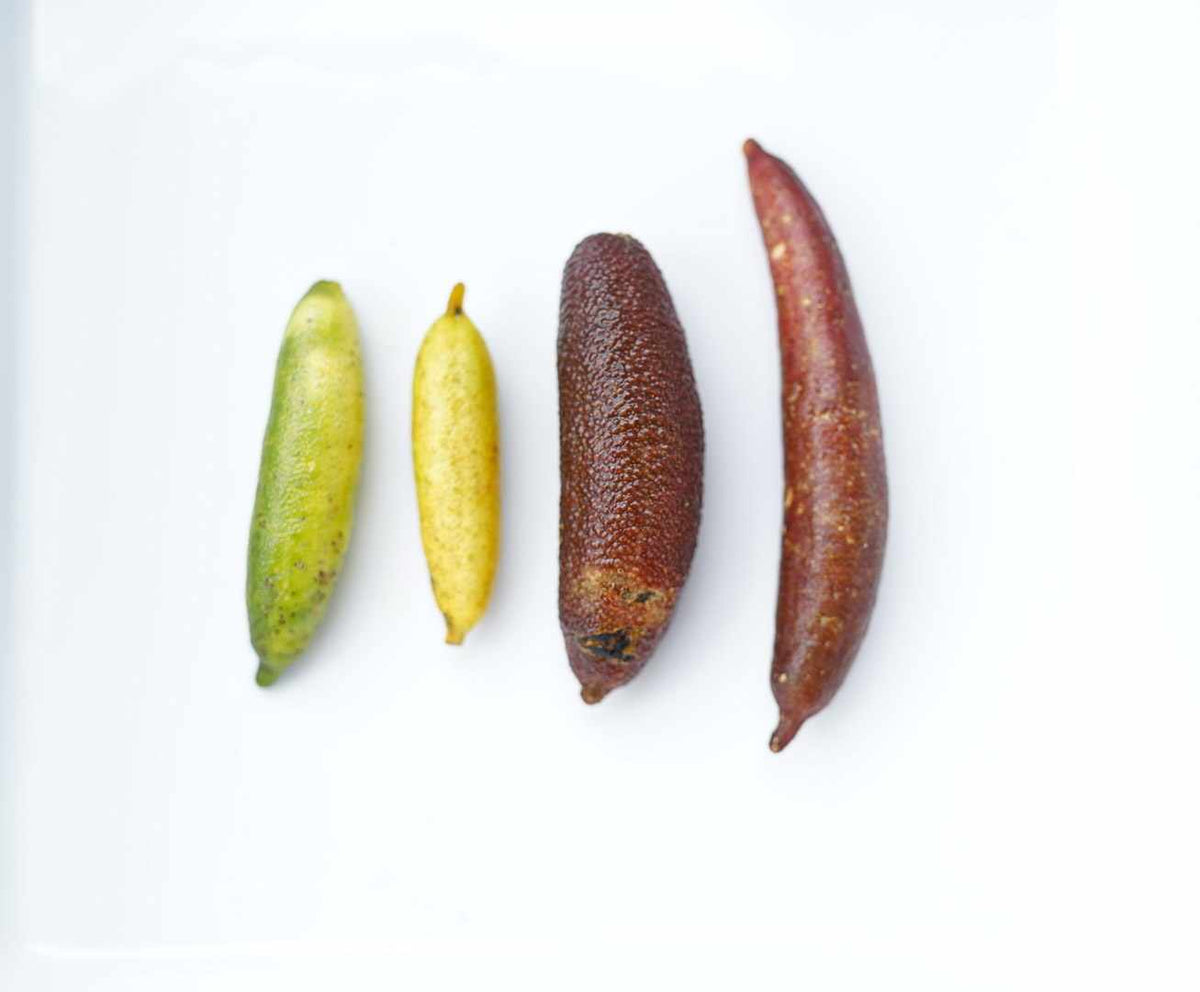
A collector's tree with two of our own finger limes on one plant. Each tree has our Aubergine Black finger lime and our new yellow finger lime grafted onto the same trifoliata rootstock, giving you two striking colours of citrus caviar from a single tree. Perfect if you want something rare and unusual, or would love both colours but only have room for one tree.
Black (Aubergine Black) – Bred in Northland and exclusively released by Flying Dragon Nursery. The fruit is almost seedless and similar in size to a standard green finger lime. As it ripens, the skin deepens to a dark red and the flesh takes on a light pink blush, with a sharp, floral lime flavour. A strong, upright, naturally high-yielding variety with large, ornamental flowers.
Yellow – Our newest finger lime, with bright yellow skin that makes a stunning contrast against the dark Aubergine fruit on the other side of the tree.
Caring for a double grafted tree – Double grafted citrus grow very well, but need a little more attention than a single graft. When your tree arrives, both grafted sides will be a similar size, and the aim is to keep them growing evenly so one side doesn't overtake the other. Simply prune whichever side is growing faster to let the other catch up. If one side does get away on you, a larger pruning cut on the taller side will even things out again.
Finger limes grow well in containers, and love free-draining soil and a layer of mulch. They do well in both full sun and part sun, and can handle light frosts once established. While establishing, protect them from frost with frost cloth or liquid frost cloth, or move container trees to a sheltered spot.
Trees that are pruned early will bush out, while unpruned trees grow more upright. Finger limes send out long water shoots that become their branches, so it's easy to shape your tree the way you'd like it to look.
Couldn't load pickup availability
Citrus Care Tips
|
Watering: Citrus plants should be watered deeply once or twice a week, depending on the soil and weather conditions. Water the plant until the soil is evenly moist, but not waterlogged. Avoid letting the soil dry out completely, as this can cause the leaves to yellow and drop. |
|
Fertilising: Feed citrus plants with a balanced fertiliser (such as a 10-10-10 formula) every month during the growing season (spring and summer). Alternatively, you can use a slow-release fertiliser or a liquid fertiliser. Citrus plants also benefit from the addition of compost or well-rotted manure to the soil. |
|
Pruning: Prune citrus plants to remove dead or damaged branches, and to shape the plant as desired. Pruning also helps to encourage new growth and keep the plant healthy. Use clean, sharp pruning tools to make precise cuts. |
|
Pest control: Keep an eye out for pests such as aphids, mealybugs, and mites, which can damage citrus plants. These pests can be controlled through the use of natural methods such as introducing beneficial insects, or by using pesticides as a last resort |
|
Sunlight: Citrus plants need plenty of sunlight to grow and produce fruit. In most cases, a location with 6-8 hours of direct sunlight per day is ideal. |
|
Soil: Citrus plants prefer well-draining, slightly acidic soil with a pH of 6.0-6.5. If your soil is not suitable, you can improve it by adding compost or peat moss to increase the organic matter content. |
|
Pollination: Citrus plants are self-pollinating, which means that they do not need to be pollinated by another plant in order to produce fruit. However, the presence of bees and other pollinators can help to improve the quality and quantity of fruit. To attract pollinators, consider planting flowering plants near your citrus trees. |
|
Temperature: Citrus plants thrive in warm temperatures and can tolerate a wide range of temperatures, as long as they are protected from frost. |
|
Mulching: Mulch around the base of your citrus plant to help retain moisture and suppress weeds. Use a mulch that is well-draining, such as wood chips or pine needles. Avoid using a mulch that is too thick, as this can prevent water and air from reaching the roots. |
|
Pruning for fruit production: To encourage fruit production, prune your citrus plant to allow for good air circulation and sunlight penetration. Remove any branches that are crossing or rubbing against each other, as well as any branches that are diseased or damaged. |
| Pesticide use: If you need to use pesticides on your citrus plant, be sure to follow the instructions on the label carefully. Wear protective clothing, such as gloves and a mask, to avoid exposure. Avoid applying pesticides when pollinators are present, and wash your hands thoroughly after handling pesticides. |

View our full range of Citrus Trees NZ here.