


Lemon - Variegated Villa Franca (Gold Form)
- Regular price
-
$44.99 - Regular price
-
- Sale price
-
$44.99
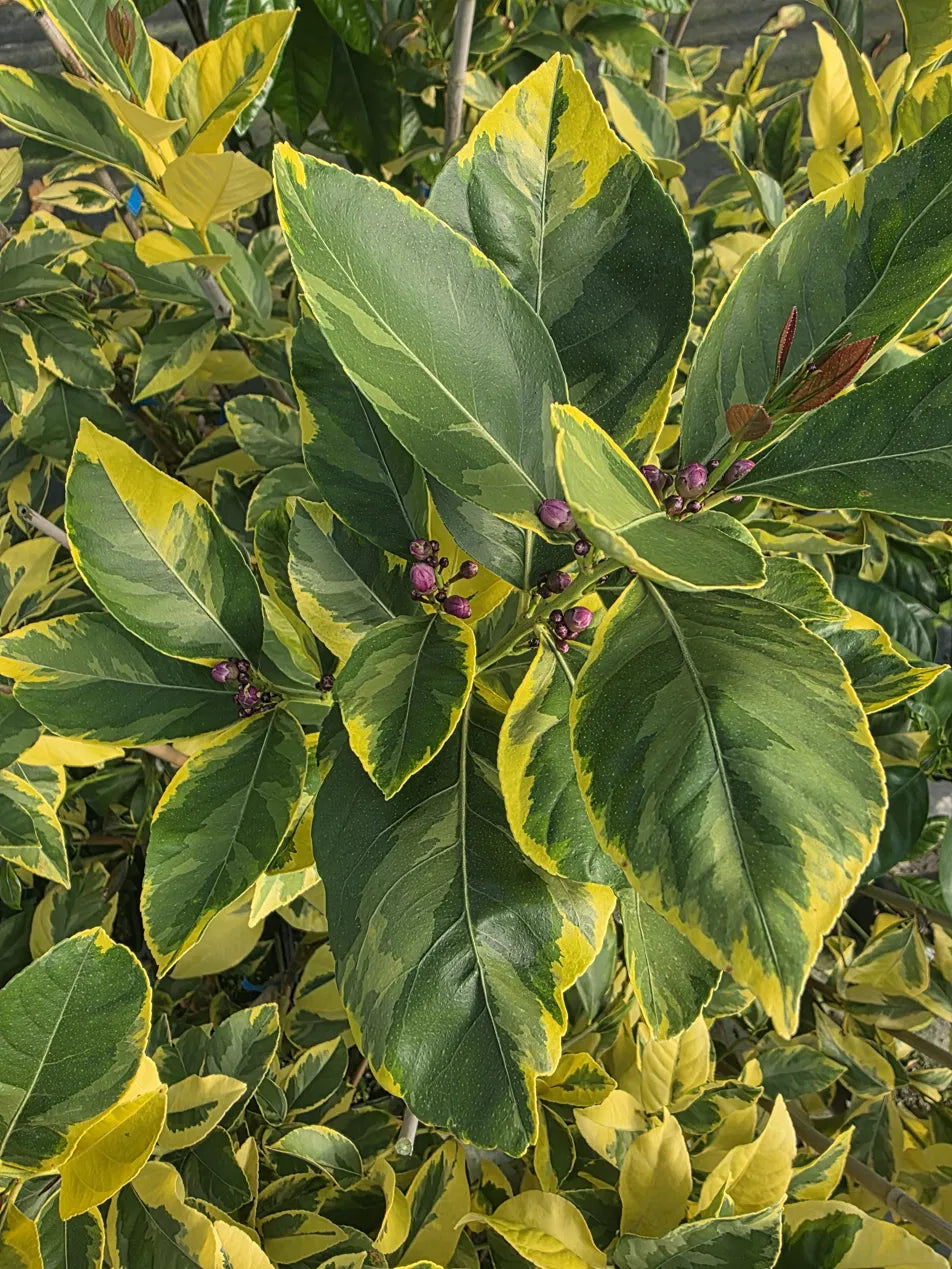
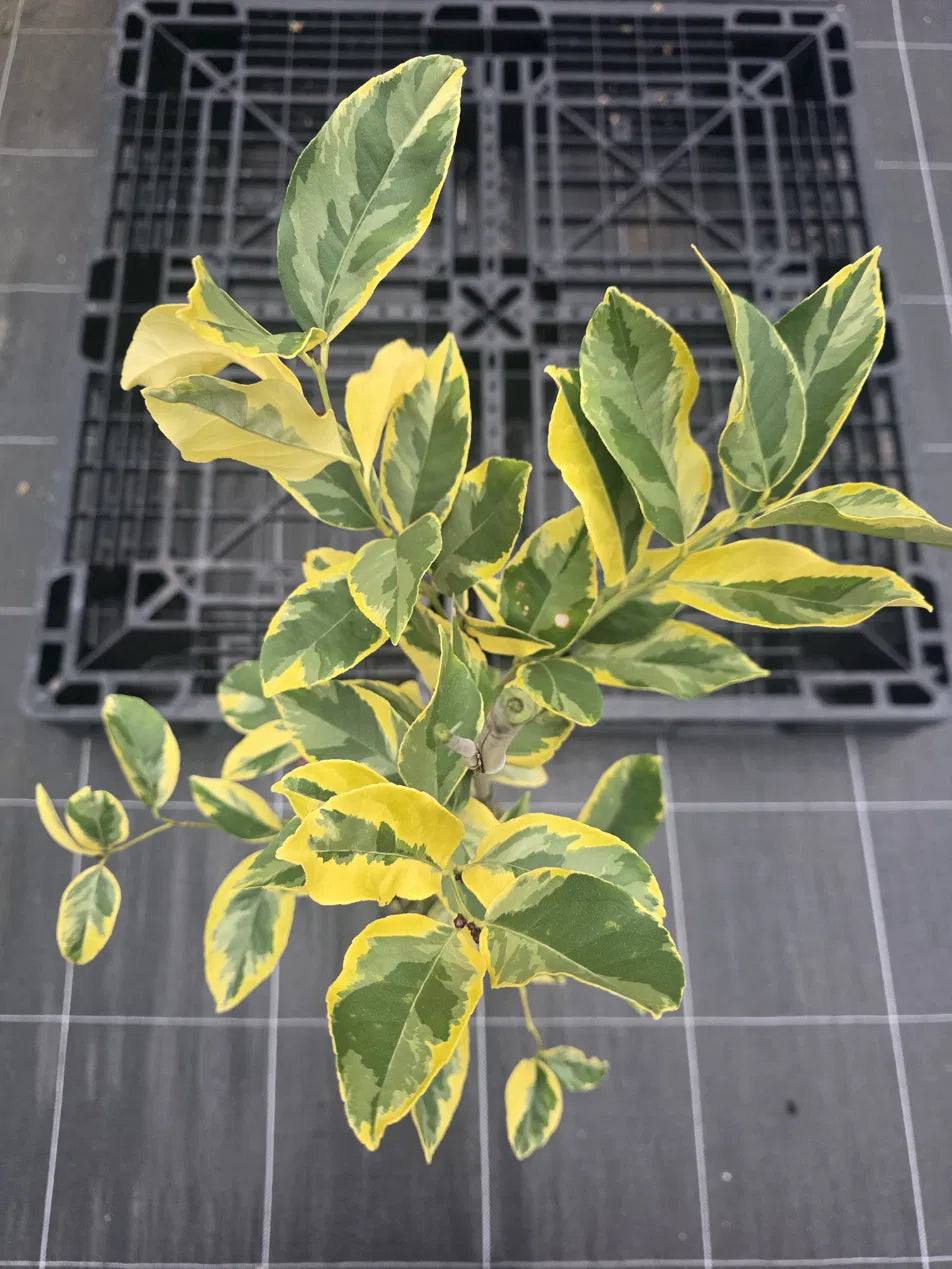
This is the gold form of variegated Villa Franca, the same true lemon as our standard Villa Franca. If you've seen variegated lemons with thin white edging or scattered cream patches, this one is different. Each leaf has a wide butter-yellow edge around a grey-green centre, the pattern runs evenly across the whole plant, and every so often a shoot comes through almost entirely gold. The leaves are glossy and leathery, so the tree looks good all year, with or without fruit.
The flower buds are deep purple and open into strongly scented blossom. Worth planting somewhere you'll walk past it.
The fruit is a proper lemon: sharp, juicy, very few seeds. Young lemons are striped green and turn plain yellow as they ripen. The flesh inside is ordinary pale lemon, not pink.
Couldn't load pickup availability
Citrus Care Tips
|
Watering: Citrus plants should be watered deeply once or twice a week, depending on the soil and weather conditions. Water the plant until the soil is evenly moist, but not waterlogged. Avoid letting the soil dry out completely, as this can cause the leaves to yellow and drop. |
|
Fertilising: Feed citrus plants with a balanced fertiliser (such as a 10-10-10 formula) every month during the growing season (spring and summer). Alternatively, you can use a slow-release fertiliser or a liquid fertiliser. Citrus plants also benefit from the addition of compost or well-rotted manure to the soil. |
|
Pruning: Prune citrus plants to remove dead or damaged branches, and to shape the plant as desired. Pruning also helps to encourage new growth and keep the plant healthy. Use clean, sharp pruning tools to make precise cuts. |
|
Pest control: Keep an eye out for pests such as aphids, mealybugs, and mites, which can damage citrus plants. These pests can be controlled through the use of natural methods such as introducing beneficial insects, or by using pesticides as a last resort |
|
Sunlight: Citrus plants need plenty of sunlight to grow and produce fruit. In most cases, a location with 6-8 hours of direct sunlight per day is ideal. |
|
Soil: Citrus plants prefer well-draining, slightly acidic soil with a pH of 6.0-6.5. If your soil is not suitable, you can improve it by adding compost or peat moss to increase the organic matter content. |
|
Pollination: Citrus plants are self-pollinating, which means that they do not need to be pollinated by another plant in order to produce fruit. However, the presence of bees and other pollinators can help to improve the quality and quantity of fruit. To attract pollinators, consider planting flowering plants near your citrus trees. |
|
Temperature: Citrus plants thrive in warm temperatures and can tolerate a wide range of temperatures, as long as they are protected from frost. |
|
Mulching: Mulch around the base of your citrus plant to help retain moisture and suppress weeds. Use a mulch that is well-draining, such as wood chips or pine needles. Avoid using a mulch that is too thick, as this can prevent water and air from reaching the roots. |
|
Pruning for fruit production: To encourage fruit production, prune your citrus plant to allow for good air circulation and sunlight penetration. Remove any branches that are crossing or rubbing against each other, as well as any branches that are diseased or damaged. |
| Pesticide use: If you need to use pesticides on your citrus plant, be sure to follow the instructions on the label carefully. Wear protective clothing, such as gloves and a mask, to avoid exposure. Avoid applying pesticides when pollinators are present, and wash your hands thoroughly after handling pesticides. |

View our full range of Citrus Trees NZ here.